Storm Season in Mallorca: A Captain’s Guide to Protecting Your Yacht
Mallorca looks like a gentle place to keep a yacht. For seven months a year, it is. But from October to April, the island sits on the path of three of the western Mediterranean’s most consequential weather systems—and yachts that aren’t protected end up in expensive trouble every single winter.
This is a captain’s guide to storm season in Mallorca: what actually happens, what owners typically miss, and the protocols that keep yachts safe through the worst of it. It’s written from the perspective of someone who’s spent more than a few 4am hours on docks during force 9 events. Theory matters less than practice here.
What ‘storm season’ actually means in Mallorca
Three named winds dominate Mallorca’s storm season:
Tramuntana — north / northwest
The headwind. Funnels off the Pyrenees, accelerates across the Gulf of Lion, and hits Mallorca’s north coast and Palma Bay with sustained force 7–8 and gusts to force 9 or 10. Most damaging to yachts in north-facing or partially protected berths. Active October to April, peaking December–February.
Gregale — northeastwe
Sometimes called the Levant in its Eastern Med form. Persistent, builds significant swell, and pushes water into east-facing berths. Particularly bad for yachts in Alcúdia, Cala Ratjada, and east-facing harbors. Active autumn and winter.
Mistral and Llevant systems
Less localized but produces extended periods of strong wind and rough sea state. Bring rain, swell, and changeable conditions over 48–72 hours.
Beyond named winds, Mallorca produces:
- Gota fría events (cold drop) — sudden autumn storms with violent gusts and torrential rain
- Saharan dust events—orange rain that deposits abrasive dust on every surface
- Summer thunderstorms—short and intense, can produce force 8 gusts with little warning
Before the storm: 48-hour preparation
When forecast shows a major event 48 hours out, the prep window starts. Specific actions, in order:
48 hours before:
- Review forecast in detail—check Windy.com, Predictwind, AEMET, plus local weather services
- Identify which way the worst wind will hit your berth
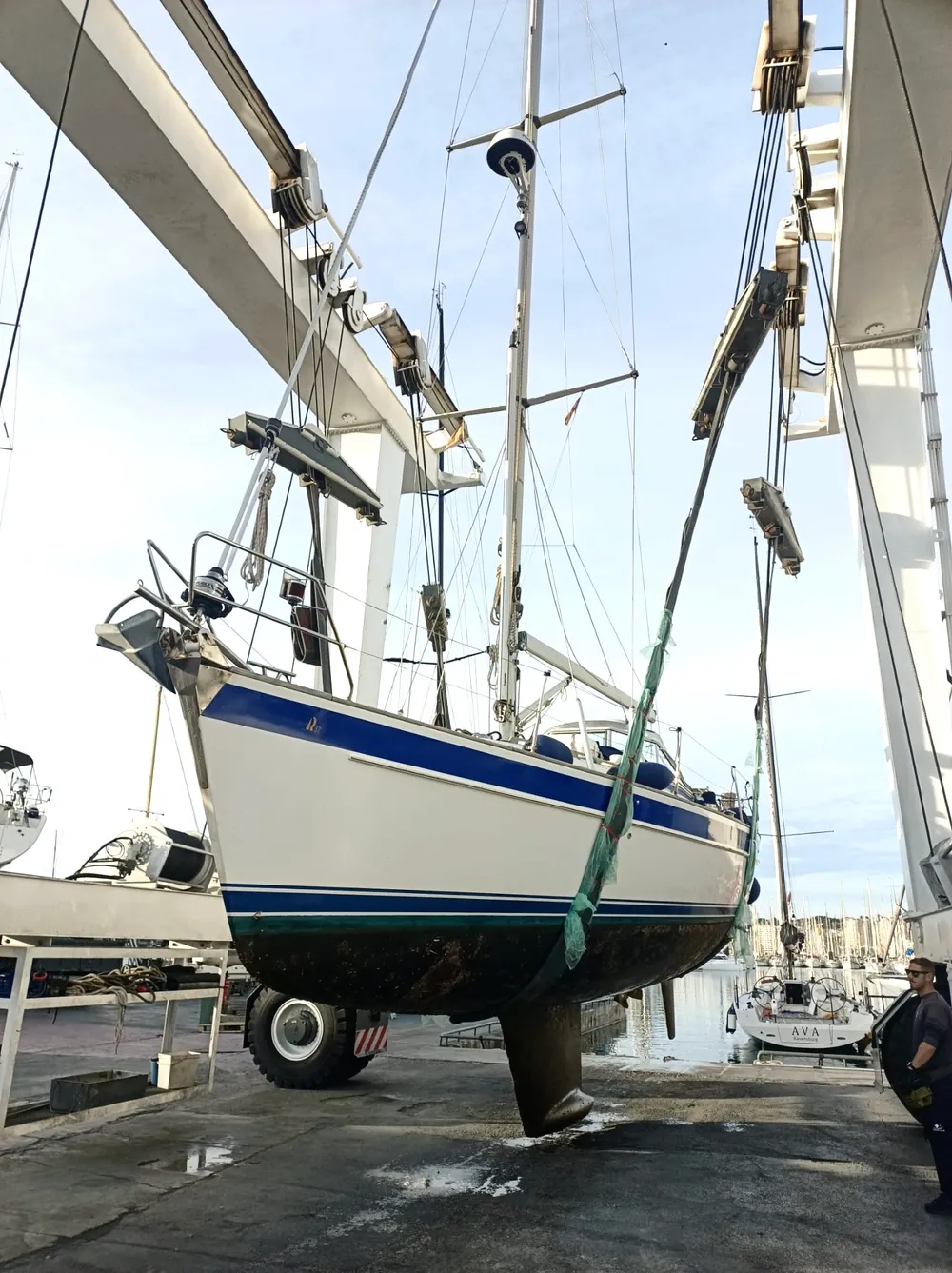
- If yacht is hauled out and exposed, contact the yard about additional bracing
- Inform the marina office of any concerns about your berth
24 hours before:
- Double all primary mooring lines on the windward side
- Add chafe protection—proper hose, leather, or commercial chafe gear at every fairlead and cleat
- Check fender placement — replace soft or undersized fenders
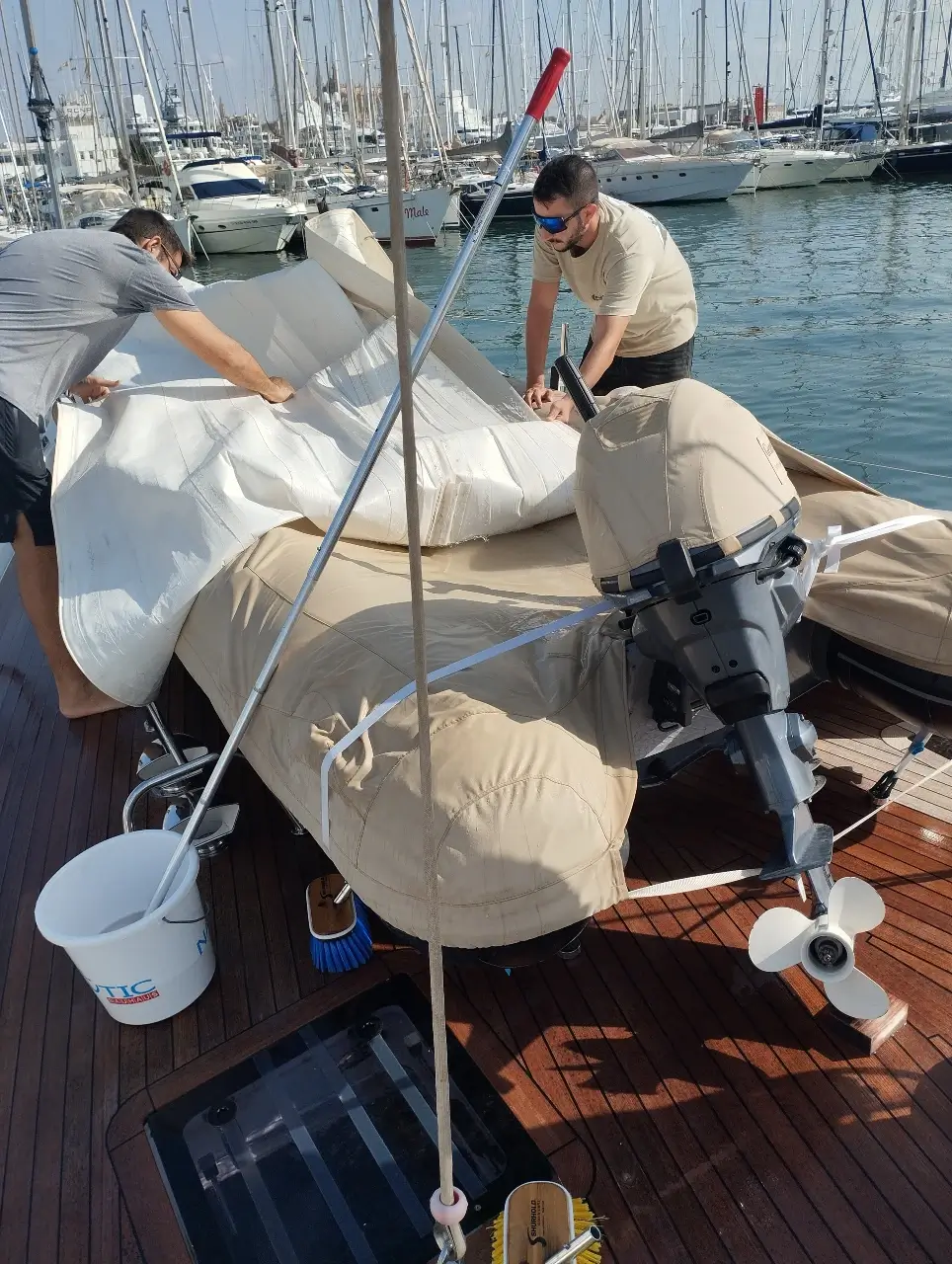
- Remove biminis, sail covers, awnings, and anything else that can act as a sail
- Stow loose items on deck — winch handles, cushions, fishing gear
- Test bilge pumps and confirm batteries fully charged
- Take dated photos of yacht in pre-storm condition
12 hours before:
- Final visual check — every line, every fender
- Confirm shore power connection is secure
- Lock all hatches, vents, and windows
- Drop sails fully if not removed entirely
- Brief anyone with access to the yacht on the situation
During the storm
Once winds are above force 7, going on board is dangerous and rarely useful. The right protocol is to monitor remotely:
- Check marina webcams (most Mallorca marinas now have them)
- Stay in WhatsApp contact with anyone on-island who can do drive-by visual checks
- Don’t board a yacht in a storm unless absolutely necessary—falls and crush injuries on docks are real
- Be ready to coordinate emergency response if the yacht starts dragging or breaking lines
The single most important number during a storm is the marina office number. Save it. Marinas can deploy emergency lines, additional fenders, and personnel if a yacht is in trouble—but they need to know which yacht is whose
After the storm: the inspection that matters most
Within 24 hours of conditions easing, every yacht needs a full inspection. This is where most damage gets identified — and where most owners discover what they would have prevented if pre-storm prep had been better.
Inspection checklist:
- Walk all mooring lines for chafe, stretch, or damage—replace anything that looks fatigued
- Check fender condition and position
- Inspect topsides for any contact damage
- Check anchor and chain if used
- Look for water ingress in deck hardware areas
- Open the boat—check bilges, smell for fuel or sewage leaks
- Run engine and generator briefly
- Test all bilge pumps
- Check rigging on sailing yachts (visible inspection)
- Photograph everything for insurance records
The five storm-season mistakes we see most often
- Underestimating chafe. The most common mode of mooring failure isn’t a parting line—it’s a line that wore through where no one looked. Chafe protection is the single best storm-season investment.
- Trusting old lines. Mooring lines older than 18–24 months often look fine but have lost significant strength to UV. Replace before storms, not after.
- Leaving canvas up. Biminis, sun awnings, sail covers, and dodgers all act as sails in 50-knot wind. They tear, they damage their mountings, and they can take rigging with them. Strip everything 24 hours before.
- No post-storm inspection. The storm passes, the wind drops, and most owners assume everything is fine. Half the damage we ever see was already done—but only diagnosed weeks later, when it had become worse.
- Relying on the marina. Marinas are not your insurance. They handle berth security but not yacht-specific protection. Anything beyond standard berth-keeping is your responsibility (or your manager’s).
How professional management handles storms
Professional yacht management for absentee owners includes structured storm protocols. For yachts under our care:
- 48 hours before any forecast force 7+: pre-storm preparation visit
- The owner is informed of every major weather event and what’s been done
- During storms: monitoring via marina cameras and on-island contacts
- Within 24 hours of the event: full post-storm inspection with photo report
- Any damage documented for insurance the same day
This is how absentee owners stay calm during winter storms—because they’re not relying on luck.
Summary
Storm season in Mallorca produces predictable weather events with predictable consequences for unprepared yachts. Most damage isn’t bad luck—it’s the result of preparation that wasn’t done, lines that weren’t checked, and inspections that didn’t happen.
Pre-storm prep, during-storm monitoring, and post-storm inspection—these are the three steps that separate yachts that come through winters intact from yachts that need expensive April repairs.
If you’d like a free assessment of your yacht’s storm-readiness for the coming season, get in touch via WhatsApp or our contact form. We’ll review your current setup and identify any gaps before the next major event.