Most owners pick a yacht management company the same way: a broker mentions a name, the price sounds reasonable, the boat seems fine for a while.
Then something happens while you’re 2,000km away — and you find out what you actually bought.
This is the conversation to have before you sign. Nine questions, what a straight answer sounds like, what should make you slow down, and a scope sheet you can send to every provider so the quotes come back comparable. Written for owners who keep a yacht in Mallorca and live somewhere else.
1. Who physically goes to the boat — and how often?
You are not buying a company. You are buying a person walking down a pontoon on a Tuesday.
A straight answer sounds like: a named person, a stated frequency (weekly, fortnightly), and who covers them when they’re on holiday or on a delivery.
Slow down if: you get “our team” with no names, or a frequency that moves depending on how you ask. If nobody is accountable by name, nobody is accountable.
Ask who attends in August, when every yard and every crew in Palma is at capacity.
2. What exactly gets checked on each visit?
“We check the boat” is not a scope. Ask for the actual list.
A real guardianage check covers, at minimum:
- Bilges — dry, and the pumps cycling
- Battery state and charging
- Shore power, and the connection itself
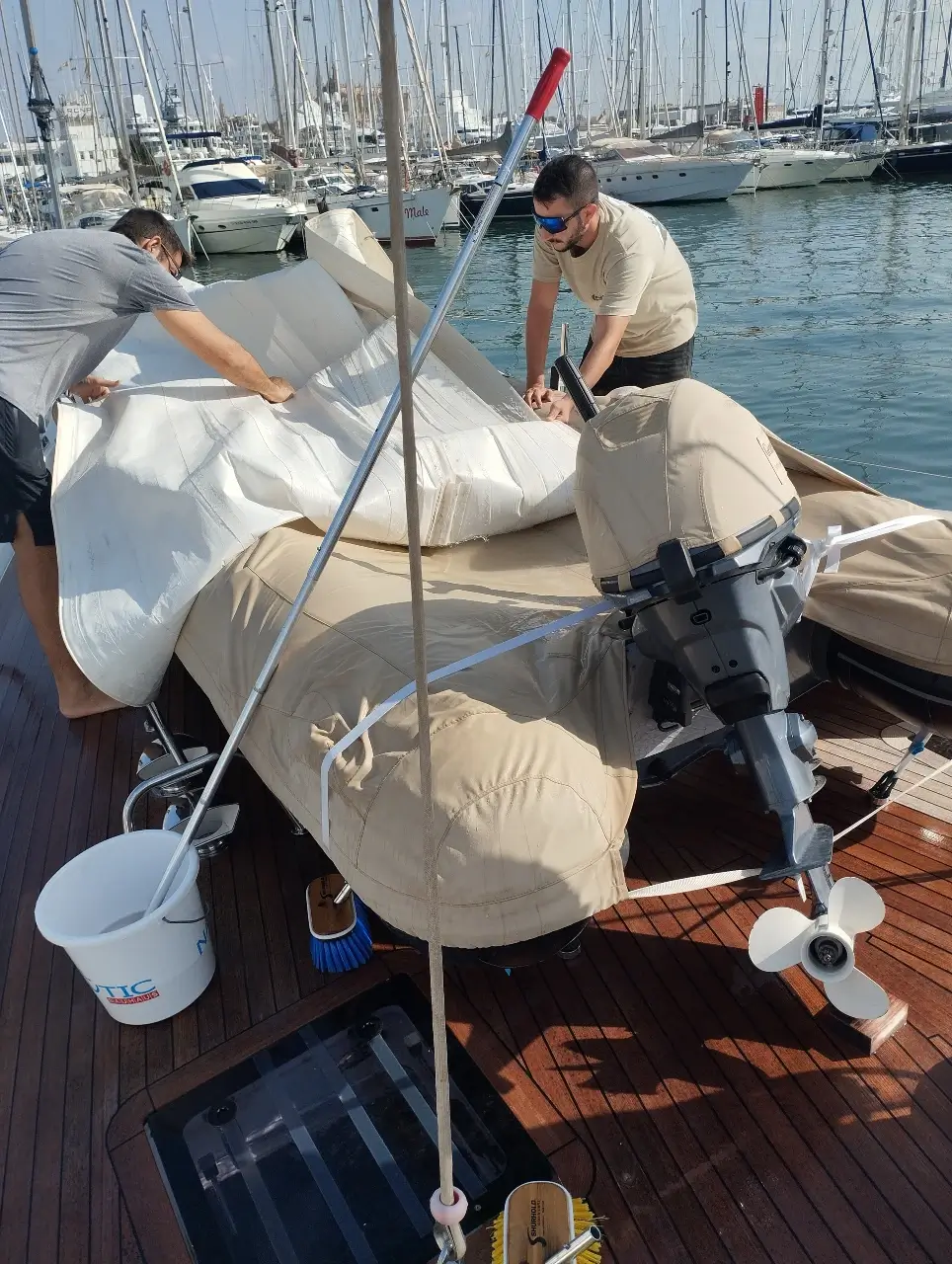
- Mooring lines, fenders, chafe points
- Deck and cover condition after wind
- Hatches, seals, signs of water ingress
- Security — locks, tender, outboard, anything portable
- Engine room visual, fluid levels, no new leaks or smells
- Climate inside: humidity, mould risk, ventilation
If the list you’re given is shorter than that, you’re buying a look, not a check.
3. What do I receive after each visit — and how fast?
This is the question that separates providers.
A straight answer sounds like: a dated report with photos, sent the same day, whether or not anything is wrong.
Slow down if: you’ll hear from them “if there’s a problem.” Silence is not information. You have no way to tell the difference between a dry bilge and a visit that never happened.
Reports also have a second life. Dated, documented maintenance evidence supports an insurance claim and supports your asking price at resale. That makes reporting a financial feature, not an admin one.
Ask to see a redacted example of a real report from another vessel. If none exists, that tells you something.
4. What’s in the monthly fee, and what gets billed on top?
Almost every dispute between owner and manager starts here.
Get it in writing:
- Number of visits included per month
- Whether winter and summer scope differ
- Travel time — included or billed?
- Waiting time at the yard — billed?
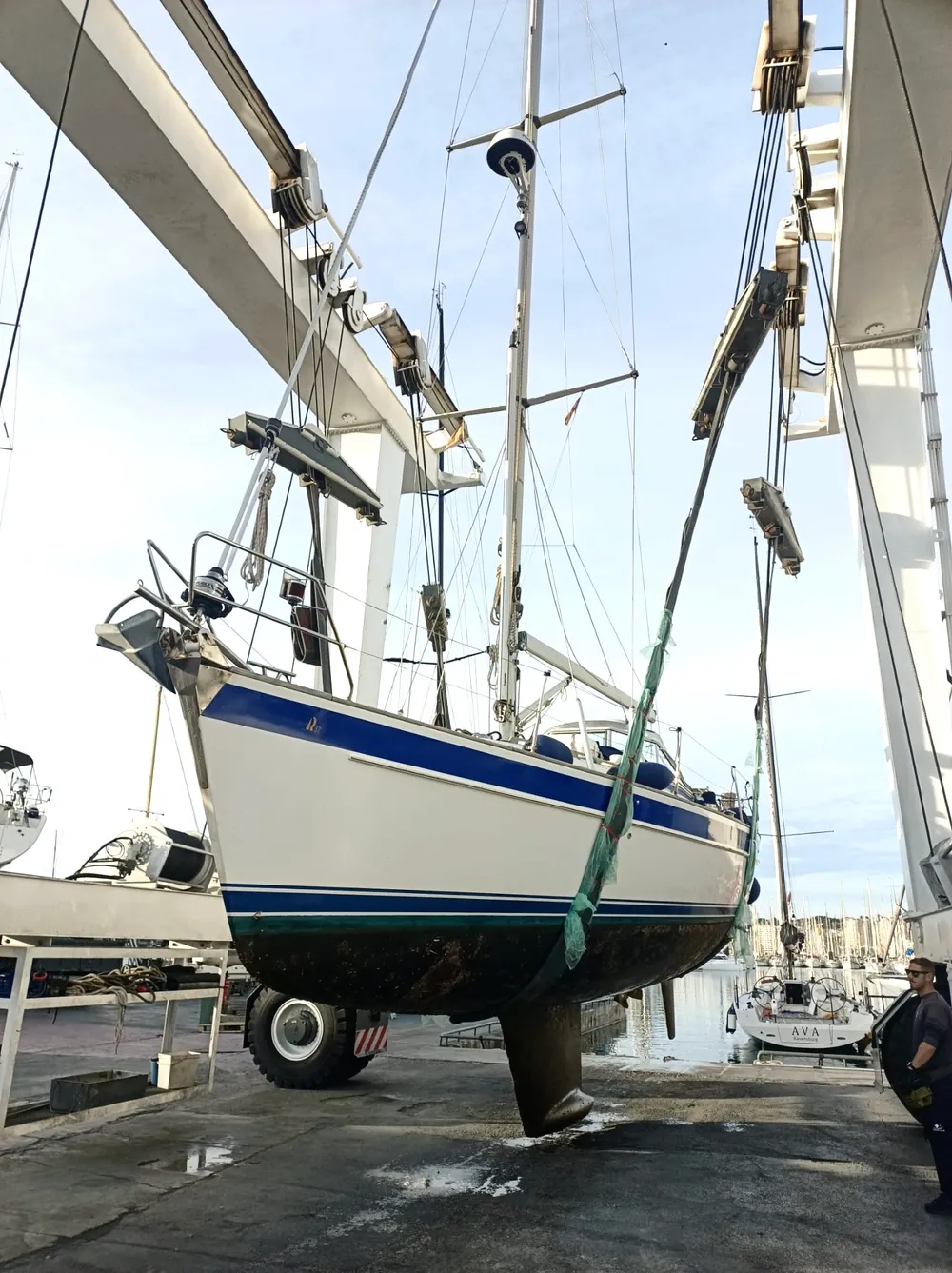
- Movements: berth shifts, hauling out, sea trials
- Owner arrival prep: is this in the retainer or extra?
- Out-of-hours attendance in bad weather
Slow down if: the quote is a single number with no breakdown. A low headline fee with everything billable is usually the most expensive option on the table.
5. How do you charge for contractor work?
Your manager will hire painters, engineers, electricians, riggers. How they make money on that changes their incentives.
Three common models in Palma:
1. Pass-through at cost + a supervision fee or hourly rate for attendance. Cleanest.
2. Cost plus disclosed markup — typically 10–20%. Fine, if it’s disclosed up front and on every invoice.
3. Undisclosed markup. You get one number and no supplier invoice.
Ask directly: “Do you take a commission from contractors, and will I see their original invoices?” A good manager answers this without flinching. Hesitation here is the single most useful signal in the whole conversation.
6. Who holds the keys, and how is access logged?
Your yacht will be entered by people you have never met — engineers, cleaners, surveyors, delivery drivers.
A straight answer sounds like: keys held securely by a named person, every attendance logged with date, who, and why, and you get told before a third party boards.
Slow down if: keys live in an office drawer, or contractors keep their own set “for convenience.” Insurers ask about this after a loss, and so should you.
7. What’s your response time — and to what?
There’s a difference between answering an email and getting to the boat.
Ask for both:
- Owner query: a serious operator answers the same day.
- Attendance in an emergency: how fast can someone physically be on board, and who goes if your person is at sea?
Mallorca’s weather is the test. A tramuntana or a summer squall is when management is either real or theoretical. Get the trigger in writing — “after any wind warning above X knots for our zone, we attend and report” — rather than relying on someone in Palma deciding your boat is worth a Saturday night.
8. What insurance do you carry — and what doesn’t it cover?
Ask for the certificate, not the reassurance.
You want to see professional liability and, if they move your vessel, cover for movements and skippering. Then ask the better question: what is excluded? Anyone who has actually read their own policy can answer that.
Also ask how they work with your underwriter: whether the visit reports are structured in a way that supports a claim.
9. How do I leave?
The exit terms tell you how confident they are.
- Notice period — one month is normal, six is a warning
- Who owns the service history, photos, and records (answer: you)
- How keys, documents, and manuals are handed back
- Whether there’s an exit or handover fee
A straight answer sounds like: “One month, and everything on file is yours, we’ll send it over.” Anything more complicated is a lock-in dressed as a contract.
Send every provider the same scope
Three quotes will come back at three different prices, and almost never for the same work. One includes weekly visits. One says “regular.” One includes winter covers but bills the summer wash-downs.
Fix that before you ask for numbers. Copy the scope below, fill in your vessel details, send it to three providers, and ask each to quote against it exactly.
Vessel: [LOA / type / year / berth location] Owner presence: approx. [X] weeks per year, typically [months]
Please quote for:
- Physical attendance, [weekly / fortnightly], year-round, with winter and summer scope stated separately
- Per-visit checks: bilges and pumps, battery and charging state, shore power and connection, mooring lines and chafe, fenders, covers, hatches and seals, deck condition, engine room visual and fluid levels, interior humidity and ventilation, security of tender, outboard and portable equipment
- A dated written report with photographs after every visit, sent within [24 hours]
- Attendance after any named wind event or storm warning, plus a report
- Coordination and on-site supervision of third-party contractors — state how this is charged
- Arrival readiness before each owner visit — state what is included
- Emergency attendance — state target response time and out-of-hours charges
- Key holding and access logging
Please state separately: what is included in the monthly fee, what is billed hourly, your hourly rates, travel and waiting time policy, contractor markup or commission, insurance held, notice period.
Any provider who won’t quote against a written scope has told you how the relationship will run.
Reading the quotes when they come back
Put them in one table: visits per month, check list depth, report standard, storm trigger, contractor markup, hourly rate, what’s excluded, notice period.
Then apply three tests.
The evidence test. If you were in Zurich right now, what proof would you hold that your boat was checked last Tuesday? If the answer is “none,” the price is irrelevant.
The absent-provider test. What happens to your boat if this person is ill, at sea, or away for two weeks? Cover should have a name.
The bad-day test. 40 knots, Saturday night, you’re not on the island. Who goes, how fast, and who pays for the attendance?
Cheapest rarely survives all three. Most expensive often doesn’t either.
What it costs
Guardianage and management in Mallorca are priced on yacht size, visit frequency, and berth location. Our guardianage packages set out what each level includes, and we quote a fixed monthly figure after a free assessment.
Two things owners consistently miss when comparing numbers:
The cheap retainer is rarely the cheap year. The money is in the contractor spend, not the fee. A manager who prevents one avoidable repair has paid for themselves several times over.
Unspent budget is not a saving. A yacht that gets less attention doesn’t cost less. It costs later, in bigger numbers.
Be careful with percentage-of-value management fees. They’re normal at the large end of the market, but for a 12–18m boat with no permanent crew they’re usually the wrong shape — you end up paying for an administrative layer you don’t need instead of someone physically checking the boat.
The mistakes we see repeatedly
Hiring the person who is most available. In Palma, capacity in April says something about demand.
Buying a service list instead of a system. Everyone offers the same services. The difference is who’s coordinating them, whether anything is written down, and whether you find out about problems in week one or month four.
Accepting reassurance as reporting. “All good” is a feeling. A dated photo of a dry bilge is a fact.
Never checking the work. Once a year, ask for something specific — the last three reports, a supplier invoice, a photo of a job you were billed for. A good provider produces it in minutes. If you want a structured version of that check, we set one out in Red Flags When Hiring Yacht Care in Mallorca.
How we answer the nine questions
Since we’ve just told you what to ask, here are our answers.
Who attends: a captain with 15+ years running and maintaining yachts in Mallorca, personally accountable for your boat. Not a rota, not an office.
What gets checked: the list is agreed in writing before we start, so you know exactly what happens on every visit.
What you receive: a dated report with photographs after every visit, sent whether or not anything is wrong.
Contractor money: work supervised on site, original invoices shown.
Response: same-day to any owner query, and we attend after weather events rather than waiting to be asked from abroad.
Exit: one month’s notice, and every record we hold is yours.
We work across motor and sailing yachts and we’re physically in Mallorca. If you’re mid-comparison, send us the scope sheet above and we’ll quote against it like everyone else. That’s the point of it.
The short version
Ask who attends, how often, what they check, what you receive, what’s extra, how contractor money works, who holds the keys, how fast they respond, what they’re insured for, and how you leave.
Then send all three providers the same written scope, and compare the answers before you compare the numbers.
The right yacht management company in Mallorca isn’t the one with the best brochure. It’s the one that can answer nine specific questions without going vague.
Want an honest read on your current setup? Request a free yacht assessment — we’ll review how your yacht is currently being looked after and tell you plainly what’s solid and what isn’t. No obligation, and no pitch if things are already working.
Prefer to start on your own? Download the free Annual Yacht Owner’s Checklist for Mallorca — twelve pages covering what should happen to your boat, month by month, through a Mallorca year: free-yacht-checklist